
Running a small business often means working with limited time, resources, and marketing budgets. Finding the right customers and communicating your offer effectively can be challenging.
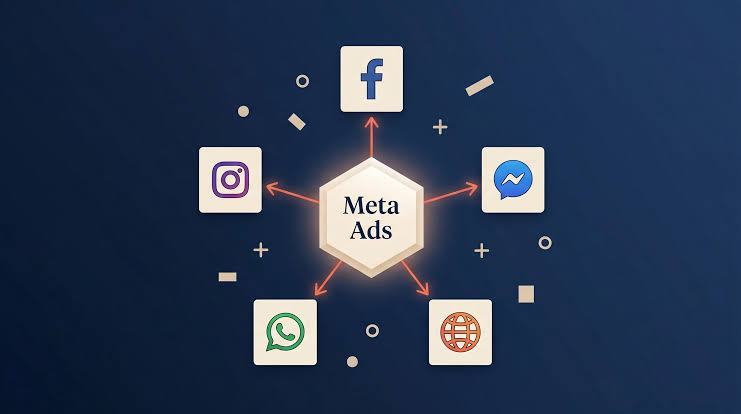
Meta Ads can help businesses promote their products and services through paid advertising on platforms such as Facebook and Instagram.
However, advertising is not simply about paying to display a post. It involves selecting an objective, identifying a suitable audience, creating persuasive content, and measuring performance.
In this article, we will explore seven potential benefits of Meta Ads and explain how small businesses can use them effectively.
1. Reach Relevant Audiences
One of the main benefits of Meta Ads is the ability to use audience selection tools to reach people who may be interested in your products or services.
Depending on the campaign and available features, businesses can use geographic targeting, eligible demographic options, custom audiences, and other audience tools.
Example: A restaurant that serves customers in a particular city can focus its advertising on that service area rather than targeting people across an entire country.
The goal is to improve relevance, not simply to reach the largest possible audience.
2. Build Brand Awareness
People may not purchase from a business the first time they encounter it. They may need to learn about the business, understand its offer, and develop confidence in its products or services.
Awareness campaigns can help businesses introduce their brand to new audiences.
For example, a newly established clothing brand could promote short videos showing its products, style, and unique features.
Repeated exposure may help people recognize the brand, although results depend on the quality and relevance of the advertising.
3. Generate Potential Customer Leads
Meta Ads can support lead generation through supported instant forms, messaging destinations, or website landing pages.
This can be particularly useful for service-based businesses that need inquiries before making a sale.
Example: An Umrah travel agency could advertise its packages and invite interested people to request information through a form or messaging channel.
The business can then follow up with relevant details, pricing, and answers to customer questions.
Remember that the number of leads is not the only important metric. Lead quality and the percentage of leads that become customers also matter.
4. Promote Products and Services Visually
Facebook and Instagram provide visual advertising formats that businesses can use to showcase their offers.
Images, videos, product demonstrations, customer testimonials used with permission, and informative graphics can help communicate value.
For example, an online store could use a product video to demonstrate how an item works rather than relying only on a written description.
Strong creative content should communicate a clear benefit and make the next step easy to understand.
5. Start With a Manageable Budget
Meta Ads allows advertisers to configure campaign budgets and schedules within the platform’s available settings.
This can help small businesses test an offer before committing more money to advertising.
However, advertising costs and results vary. A low budget may provide limited data, especially when the audience is competitive or the conversion process takes time.
Start with an amount your business can afford to test, define a measurable goal, and avoid increasing spending simply because a campaign has received clicks.
6. Measure Advertising Performance
Meta Ads Manager provides reporting that helps advertisers evaluate campaign performance.
Depending on the objective, useful metrics may include:
- Reach and impressions
- Link clicks and click-through rate
- Cost per result
- Cost per lead
- Landing page views
- Purchases and conversion value, when properly tracked
These metrics help you assess whether your advertising is contributing to your business goals.
For example, a campaign generating many clicks but very few qualified inquiries may need a better offer, landing page, or audience strategy.
7. Retarget Eligible Audiences
Some potential customers visit a website, engage with content, or interact with a business without purchasing immediately.
Where permitted and supported, businesses may create custom audiences from eligible interactions and use them in retargeting campaigns.
For example, an online store could advertise relevant products to eligible website visitors who did not complete a purchase.
Retargeting must respect applicable privacy requirements, consent rules, Meta’s policies, and audience eligibility restrictions.
Are Meta Ads Right for Every Small Business?
Not necessarily.
Meta Ads may be a good fit when your audience uses Meta platforms, your offer can be communicated effectively through visual or social advertising, and you have a clear plan for handling inquiries or purchases.
Other channels may be more appropriate when customers primarily search for a specific service or when your audience is difficult to reach through social platforms.
The best marketing channel depends on customer behavior, business objectives, and available resources.
Conclusion
Meta Ads can help small businesses reach relevant audiences, build brand awareness, generate leads, showcase products, and measure advertising performance.
The real benefit comes from using the platform strategically. Choose an objective that matches your business goal, create content that speaks to your audience, and evaluate results based on meaningful business outcomes.
Start by testing one clear offer, learning from the data, and improving your campaign before expanding your spending.