
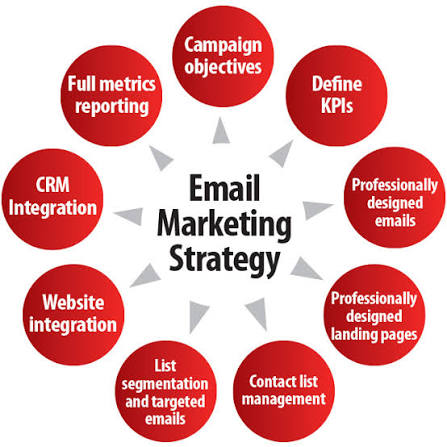
Businesses have several ways to reach their audiences online, but two widely used channels are email marketing and social media marketing.
Both can help businesses share information, build relationships, promote offers, and encourage customers to take action.
However, they work differently.
Social media helps businesses publish content and participate in conversations on third-party platforms. Email marketing allows businesses to send messages to subscribers who have agreed to receive them.
Choosing between the two depends on your audience, resources, business goals, and the type of relationship you want to build.
Let’s compare their strengths and limitations.
What Is Email Marketing?
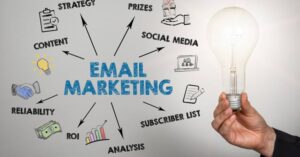
Email marketing uses email to communicate with subscribers for purposes such as education, product promotion, customer retention, and relationship building.
Businesses may send newsletters, product updates, automated sequences, and promotional campaigns.
Its main advantage is the ability to communicate directly with an audience through an email service, subject to deliverability, privacy, and consent considerations.
However, owning or managing an email list does not guarantee that messages will reach the inbox or be read.
What Is Social Media Marketing?
Social media marketing involves using platforms such as Instagram, Facebook, LinkedIn, and other relevant networks to publish content, interact with users, and promote products or services.
Depending on the platform and strategy, businesses can use organic posts, short videos, communities, influencer partnerships, and paid advertising.
Social media can help brands introduce themselves to new audiences and participate in conversations where people already spend time.
However, reach and visibility can be influenced by platform algorithms, advertising budgets, competition, and changing platform policies.
Email Marketing vs. Social Media Marketing: Comparison
| Factor | Email Marketing | Social Media Marketing |
|---|---|---|
| Audience access | Communicates with a permission-based subscriber list | Reaches followers and potentially other users through platform distribution |
| Distribution | Depends on deliverability, filtering, and subscriber engagement | Depends on platform algorithms, content, audience activity, and paid promotion |
| Content format | Primarily email messages with links, images, and other supported content | Supports varied formats such as posts, images, videos, stories, and live content |
| Personalization | Can use suitable subscriber preferences and customer data | Can tailor content and advertising using platform-supported tools |
| Relationship building | Supports direct, ongoing subscriber communication | Supports public interaction, community participation, and discovery |
| Automation | Supports triggered messages and email sequences | Some scheduling, messaging, and advertising workflows can be automated |
| Measurement | Clicks, conversions, unsubscribes, delivery, and other email metrics | Reach, impressions, engagement, clicks, and conversions where measurable |
| Main risks | Deliverability issues, complaints, list quality, and privacy concerns | Algorithm changes, platform dependency, negative feedback, and content competition |
Neither channel guarantees better results in every situation.
Advantages of Email Marketing
Direct Subscriber Communication
Email allows businesses to communicate with people who have chosen to subscribe.
It can be useful for sending detailed information, sharing educational content, and following up on relevant customer interests.
Audience Segmentation
Businesses can group subscribers according to suitable preferences or customer characteristics.
For example, a digital marketing blog may send SEO articles to subscribers who have expressed interest in SEO.
Automated Follow-Up
Email automation can send selected messages when a subscriber joins a list or completes another defined action.
This can make communication more consistent without requiring every message to be sent manually.
Content Distribution
Bloggers can use newsletters to share new articles with subscribers and encourage repeat visits.
Advantages of Social Media Marketing
Audience Discovery
Social platforms can expose content to people who do not already follow a business.
This makes social media useful for discovery, awareness, and introducing a brand to potential customers.
Visual Storytelling
Images, videos, short-form content, and other supported formats can demonstrate products, explain services, or communicate a brand’s personality.
Community Interaction
Businesses can respond to comments, participate in relevant discussions, and build relationships through public interaction.
Paid Advertising Options
Many social platforms offer advertising tools that help businesses target audiences according to supported campaign settings.
Paid social advertising can complement organic content when the business has a clear objective and a suitable budget.
Which Channel Is Better for Small Businesses?
There is no universal winner.
Consider your immediate objective.
Choose email marketing as a priority when:
- You already have a relevant subscriber list.
- You want to distribute regular educational content.
- You need to communicate updates or offers to existing subscribers.
- Your business benefits from structured follow-up.
Prioritize social media when:
- You are introducing a new brand.
- You want to publish visual content.
- You need opportunities for discovery and community interaction.
- Your target audience actively uses relevant social platforms.
Your available time and skills also matter. A sustainable strategy is more useful than trying to manage every channel without sufficient resources.
Why Combining Both Channels Can Be Effective
Email and social media do not need to compete with one another.
They can support different stages of the customer journey.
For example:
- Publish an educational post on social media.
- Invite interested users to visit a relevant article.
- Offer a useful newsletter signup option.
- Send subscribers additional educational content.
- Share relevant products or services when appropriate.
This approach allows social media to help with discovery while email supports ongoing communication.
The process should remain transparent. Social followers should not be added to marketing email lists without an appropriate basis.
How to Measure Success
The most appropriate metrics depend on the channel and objective.
For email marketing, examine relevant indicators such as clicks, conversions, unsubscribes, and complaints.
For social media, consider reach, engagement, link clicks, and conversions where measurement is available.
For both channels, ask a larger question: are your activities helping the business achieve its goals?
For example, a service business should consider qualified inquiries and eventual customers rather than judging success entirely by likes or email opens.
Conclusion
Email marketing and social media marketing provide different ways to communicate with an audience.
Email supports direct subscriber communication, segmentation, and automated follow-up. Social media supports discovery, visual storytelling, and community interaction.
The most appropriate choice depends on your business objectives and audience. For many businesses, combining both channels creates a more flexible strategy than relying entirely on one.